Anemia Awareness Week: Turning Symptoms into Early Intervention

Select Content Type
Resources
Authored By
Shalina MedSpace
Authored On
Interests
Cardiology
Dermatology
Emergency Medicine
Endocrinology
ENT
Gastroenterology
Hematology
Immunology Allergy & Inflammation
Infectious Disease & Vaccines
Internal/Family Medicine
Neurology
Obstetrics & Gynecology
Oncology
Ophthalmology
Orthopedic
Pain & Anesthesiology
Pediatric Medicine
Psychiatry
Pulmonology
Radiology
Rheumatology
Surgery
Urology & Nephrology
Speciality
Cardiology
Dentistry
Dermatology
Emergency Medicine
Endocrinology
ENT
Gastroenterology
Geriatrics
Hematology
Immunology Allergy & Inflammation
Infectious Disease & Vaccines
Internal/Family Medicine
Medical Genetics
Neurology
Obstetrics & Gynecology
Oncology
Ophthalmology
Orthopedic
Pain & Anesthesiology
Pathology
Pediatric Medicine
Pharmacology
Psychiatry
Public Health
Pulmonology
Radiology
Rheumatology
Surgery
Urology & Nephrology
Thumbnail Image
Anemia Awareness Week: Turning Symptoms into Early Intervention_thmbl
Detail Image
Anemia Awareness Week: Turning Symptoms into Early Intervention_mbl
Book Detail
Upload PDF
WAAW 5 Nigeria.mp4 (15.58 MB)
Actions
Download in App
Countries of release
India
Nigeria
UAE
IS_Ebsco
false
Description

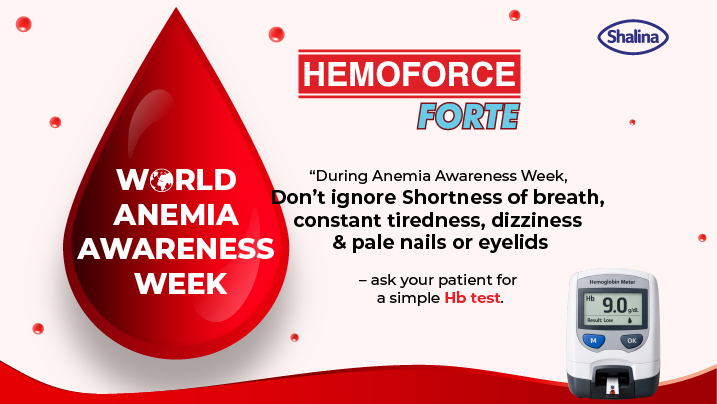
Shortness of breath, persistent fatigue, dizziness, and pallor of the nails or eyelids are common clinical features suggestive of low haemoglobin levels. Early identification allows for timely nutritional optimisation and appropriate therapeutic intervention.

During World Anemia Awareness Week, we encourage routine haemoglobin screening and strengthened patient education on iron sufficiency. Simple, evidence-based measures such as regular haemoglobin assessment, dietary counselling, and adherence to prescribed treatment can lead to significant improvements in patient outcomes.

Published Date